
- Quản trị viên
- April 21, 2026
- Market Insights & Overview
Reduce Errors, Improve Restaurant Operations Efficiency
In restaurant operations, efficiency is not only about speed – it is also about accuracy in every step of the process. A small mistake during ordering can lead to multiple consequences: incorrect dishes, longer wait times, additional workload for staff, and a compromised overall customer experience.
What makes this more challenging is that these errors are not always immediately visible, yet they silently reduce operational efficiency and profitability over time.
This is why many restaurant owners are now seeking an automated ordering solution to gain better control over processes and minimize risks.
More than just a support tool, an automated ordering solution is becoming a foundation for restaurants to operate more accurately, faster, and more efficiently in an increasingly competitive environment.
1. Operational Errors – Small Issues, Big Impact
In reality, most restaurant errors originate from basic steps. When customers place orders through staff, information must be recorded, communicated, and entered into the system. Each step carries potential risks – especially during peak hours.
A wrongly recorded dish or a missed special request does not only affect one customer – it disrupts the entire workflow. The kitchen must redo orders, service time increases, and other tables are affected as well.
These errors not only harm customer experience but also put pressure on the operations team. When they occur frequently, overall performance declines significantly.
2. Why Traditional Models Struggle with Accuracy
Even with training and experience, human error is inevitable in high-pressure environments. As customer volume increases, speed must improve – while maintaining accuracy becomes more difficult.
Many restaurants have adopted tools like POS systems or digital menus, but if the process still relies on manual input by staff, errors can still occur.
This shows that the issue is not about staff performance – it lies in the process structure. When workflows include too many intermediary steps, the risk of errors remains.
3. Automated Ordering Solution – Optimization from the Start
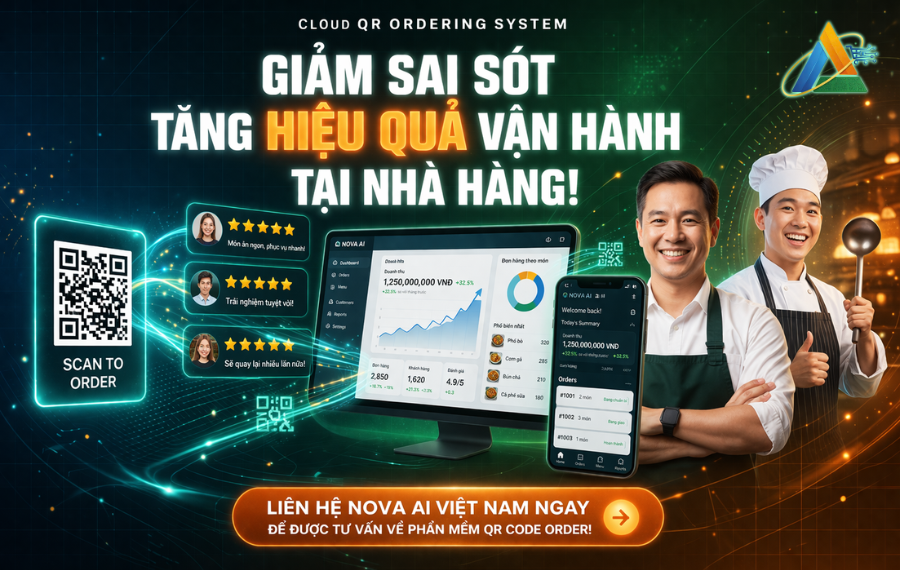
An effective automated ordering solution transforms how information is captured from the very beginning.
Instead of going through multiple steps, customers can interact directly with the system via a digital menu on their smartphones.
When customers select and confirm their orders themselves, information is sent directly to the kitchen – eliminating manual input and significantly reducing errors.
An automated ordering solution not only minimizes mistakes but also ensures consistency and better process control.
[Connect with us to elevate and redefine your brand experience]
4. Digital Menu – The Foundation for Accuracy
Within an automated ordering solution, the digital menu plays a critical role in ensuring clarity and accuracy.
Instead of relying on verbal descriptions, customers can:
- View dish images
- Read detailed descriptions
- Customize their orders
This reduces misunderstandings at the selection stage. Customers can also review their orders before confirming, further minimizing errors.
When integrated into an automated ordering solution, a digital menu not only improves accuracy but also enhances the customer experience significantly.
5. Improving Efficiency Through Standardized Processes
One of the biggest advantages of an automated ordering solution is process standardization.
When all orders follow a consistent workflow within the system, restaurants reduce reliance on individual staff performance. This ensures stable operational quality across all shifts.
At the same time, fewer errors mean the kitchen can operate more efficiently. Without reprocessing orders, preparation time is optimized and service speed improves.
6. Reducing Errors to Lower Costs and Increase Profitability
Operational errors not only affect customer experience but also generate additional costs – wasted ingredients, longer processing times, and increased staff workload.
By implementing an automated ordering solution, these costs are significantly reduced. A smoother workflow leads to better resource utilization and improved staff efficiency.
At the same time, better customer experience increases retention and spending – key factors for sustainable growth.
7. Automated Ordering Solution – Building an Efficient Restaurant System
A modern automated ordering solution does more than reduce errors – it creates opportunities to optimize business performance.
When combined with a digital menu, the system can:
- Recommend suitable dishes
- Highlight combos
- Optimize the purchasing journey
This increases average order value without requiring additional staff. Meanwhile, system data helps restaurants better understand customer behavior, enabling more informed decisions.
8. When Should Restaurants Implement an Automated Ordering Solution?
Restaurants should consider adopting an automated ordering solution when they start experiencing issues such as frequent order errors, slow service, or staff overload.
These are clear signs that operational processes need optimization. Implementing the system at the right time can deliver noticeable improvements.
Reducing errors and improving efficiency are not separate goals – they are closely connected. When processes are optimized and accuracy improves, the entire operation becomes smoother.
In this context, an automated ordering solution combined with a digital menu not only solves current challenges but also builds a strong foundation for long-term growth.
🚀 Get Started with NOVA AI Vietnam
Contact us today to explore the right automated ordering solution for your restaurant:
- Real-world demo
- Operational process analysis
- Tailored optimization solutions
[Connect with us to elevate and redefine your brand experience]
👉 Greater accuracy today is the foundation for sustainable growth tomorrow.